Showing posts with label Literary Bite. Show all posts

Sunday, December 27, 2015

Literary Bite: My Favorite Quotes This Year


Nowadays I'm a sorry excuse for a blogger. But life sometimes gets in the way -- you understand -- and the more momentum you lose on a project so finicky as writing, the harder it is to get it back. 

I write to you now from Tahoe, two days after Christmas (362 sleeps 'til next Christmas!). I have this week off of work and have truly epic plans of reading, sleeping, making and eating delicious treats, reading more, sleeping even more, skiing a couple days, and probably going on some chilly but much-needed (in light of all the eating) runs. Yep, I live the dream. 

You may have noticed that the literary portion of this blog has pretty much ceased to exist. Which is an interesting turn of events considering that unlike running, travel, and baking -- activities I love but for various reasons do not always do consistently -- reading is a constant. Granted, for the past couple years grad school reading supplanted most (but not all!) of my fun fiction reading. Though now that I'm a back to full time real person-ing (aka working a normal job), there's really no excuse. 

So enough chit-chat. Back to business. Or something like that.

When I come across a passage I like, I take a picture on my phone (it's way easier than copying out a quote), then save those in a folder for future reference. This folder often just exists, but can be nice to look back at and figure out what it was that struck me about any given phrase, sentence, page, or paragraph. Thus, in lieu reviewing each book I read this year, instead I'd like to share with you my favorite quotes from the best books I read. I recommend reading them out loud -- good ideas are best when heard as well as read.

My Favorite Quotes (and books) of 2015


  • “That's the way it is in life. You let go of what is beautiful and unique. You pursue something new and don't even know that the wind of your own running is a thief.” - Sena Jeter Naslund, Ahab's Wife, or The Star-Gazer

  • I would cry my cry to you if you were here. But you are not. Therefore it must be to Florence. Florence must be the one to suffer these moments when a veritable blast of fear goes out from me scorching the leaf on the bough. "It will be all right": those are the words I want to hear uttered. - J.M. Coetzee, Age of Iron
  • "a wretched set of incompetent noodles." - Adam Hochschild, King Leopold's Ghost
  • I love to recall when you were one year old and you took your first steps and you fell on your bottom and cried, surprised at the hardness of the wood floor. The first stomp of your tomboy foot. The day you came in with the firewood and stood in the doorway, almost taller than I, and you said that you would be leaving soon, and I asked where and you replied to me: Exactly. - Colm McCann, Zoli
  • Colman put back his head and roared. "Being with you," he said, "is just like being with myself. Only better." - Ruth Reichl, Comfort Me with Apples
  • “So few American novels have happy endings. Perhaps this is not surprising in a nation whose declaration of independence provides its citizens not with the right to happiness, but the right to its pursuit.” - Azar Nafizi, The Republic of Imagination

  • “I think about pinball, and how being a kid’s like being shot up the firing lane and there’s no veering left or right; or you’re just sort of propelled. But once you clear the top, like when you’re sixteen, seventeen, or eighteen, suddenly there’s a thousand different paths you can take, some amazing, others not. Tiny little differences in angles and speed’ll totally alter what happens to you later, so a fraction of an inch to the right, and the ball’ll just hit a pinger and a dinger and fly down between your flippers, no messing, a waste of 10 p. But a fraction to the left and it’s action in the play zone, bumpers and kickers, ramps and slingshots and fame on the high-score table.”  - David Michell, The Bone Clocks
  • “It was one of those humid days when the atmosphere gets confused. Sitting on the porch, you could feel it: the air wishing it was water.” - Jeffrey Eugenides, Middlesex
  • “Furthermore, unlike many other great predators of history, from Genghis Khan to the Spanish conquistadors, King Leopold II never saw a drop of blood spilled in anger. He never set foot in the Congo. There is something very modern about that, too, as there is about the bomber pilot in the stratosphere, above the clouds, who never hears screams or sees shattered homes or torn flesh.” - Adam Hochschild, King Leopold's Ghost
  • “the most powerful mind is the quiet mind. It is the mind that is present, reflective, mindful of its thoughts and its state. It doesn’t often multitask, and when it does, it does so with a purpose.” - Maria Konnikova, Mastermind

  • “Pragmatists are sometimes more prone to illusion than dreamers; when they fall for something, they fall hard, not knowing how to protect themselves, while we dreamers are more practiced in surviving the disillusionment that follows when we wake up from our dreams.” - Azar Nafizi, The Republic of Imagination
  • “Emotions, in my experience, aren't covered by single words. I don't believe in "sadness," "joy," or "regret." Maybe the best proof that the language is patriarchal is that it oversimplifies feeling. I'd like to have at my disposal complicated hybrid emotions, Germanic train-car constructions like, say, "the happiness that attends disaster." Or: "the disappointment of sleeping with one's fantasy." I'd like to show how "intimations of mortality brought on by aging family members" connects with "the hatred of mirrors that begins in middle age." I'd like to have a word for "the sadness inspired by failing restaurants" as well as for "the excitement of getting a room with a minibar." I've never had the right words to describe my life, and now that I've entered my story, I need them more than ever. ” - Jeffrey Eugenides, Middlesex
  • “If an atrocity isn't written about, it stops existing when the last witnesses die. That's what I can't stand. If a mass shooting, a bomb, a whatever, is written about, then at least it's made a tiny dent in the world's memory. Someone, somewhere, some time, has a chance of learning what happened. And, just maybe, acting on it. Or not. But at least it's there.”  - David Michell, The Bone Clocks
  • “Whereas I, even now, persist in believing that these black marks on white paper bear the greatest significance, that if I keep writing I might be able to catch the rainbow of consciousness in a jar.” - Jeffrey Eugenides, Middlesex


Thursday, July 31, 2014

Literary Bite: The Yellow Birds by Kevin Powers


The Yellow Birds by Kevin Powers is the best book I have read in a while. It's intense but a fast read, and so well-written that you will love it. The non-linear narrative is takes place from 2003 to 2009, in Virginia, Germany, and Iraq, from a young private's enlistment to fighting in the Iraq War to his painful return to "normal" life afterwards.

The story is sad and beautiful and painfully real all at once. While heart-wrenching is a generally overused adjective, in this case it is totally applicable. Powers writes with rhythmic concision, making me want to read some sentences out loud to get the full effect -- "The world was paper-thin as far as I could tell. And the world was the orchard, and the orchard was what came next. But none of that was true. I was only afraid of dying." It's not pretty, how war transforms the characters, but it feels true. And his descriptions of the battlefield and his emotions throughout it all make you feel like you're there.

The story is about 21-year-old Pvt. John Bartle, who fights in Tal Afar in 2003. It's about of friendship, camaraderie, and loss...though I don't want to say too much and give anything away. Ever so occasionally Powers slips into stream-of-consciousness writing at times, which I actually really liked because it's a little convoluted but just coherent enough to make you feel it. For example, this is just part of one pages-long sentence that I really admire:
“Or should I have said that I wanted to die, not in the sense of wanting to throw myself off of that train bridge over there, but more like wanting to be asleep forever because there isn’t any making up for killing women or even watching women get killed, or for that matter killing men and shooting them in the back and shooting them more times than necessary to actually kill them and it was like just trying to kill everything you saw sometimes because it felt like there was acid seeping down into your soul and then your soul is gone and knowing from being taught your whole life that there is no making up for what you are doing, you’re taught that your whole life, but then even your mother is so happy and proud because you lined up your sign posts and made people crumple and they were not getting up ever and yeah they might have been trying to kill you too, so you say, What are you goona do?, but really it doesn’t matter because by the end you failed at the one good thing you could have done, and the one person you promised would live is dead..."
The author served with the U.S. Army in Mosul and Tal Afar, Iraq in 2004 and 2005 and The Yellow Birds is his first novel. The book took him four years to write, and Powers says that it started as "an attempt to reckon with one question: what was it like over there?" But he quickly decided that he was unequal to that task, because "war is only like itself".

This is the only war book I've read, so I don't know how it compares to others in its genre. Some reviews compare it to All Quiet on the Western Front or The Red Badge of Courage.

Read this. Even if you don't read "war books." Because it's a good book, amazing piece of poetry and literature, and also because I feel like it's important. I have no idea how accurate or universal Powers' descriptions of the war and returning from war are, but I'm guessing he has a lot in common with a lot of young veterans today. This is all so very current...


Tuesday, July 8, 2014

Literary Bite: Country of My Skull by Antjie Krog


This book was exceptionally beautiful but also oof not an easy read on the emotional front. Country of My Skull by Antjie Krog is the kind of book that challenges you, makes you think, and leaves you feeling drained at the end. Which is about what I expected, considering it’s about the Truth and Reconciliation Commission in South Africa in the 1990s. The frame for the story is the experience of a white South African journalist covering the trials, but it’s focused on the series of vignettes of actual testimonies.

It’s about forgiveness and reconciliation, humanity and evil, and a country trying to build itself through the public exposure of pain and suffering.

And everyone wants to know: Who? Why? The victims ask the hardest of all the questions: How is it possible that the person I loved so much lit no spark of humanity in you? 

It’s arranged loosely chronologically by themes: Before the Commission, First Hearings, Politics, Reactions, and Unwinding. The most interesting parts to me were the actual testimonies – I think there’s a bit of voyeurism going on because reading someone else’s pain is painful but also captivating. And I also was really struck by some of the identity issues Antjie addressed and how a country as a whole can unify and forgive and rebuild after something as horrific as apartheid.

A myth is a unit of imagination that makes it possible for a human being to accommodate two worlds. It reconciles the contradictions of these two worlds in a workable fashion and holds open the way between them. 

I was less into the section on politics, as I felt that sometimes she went into too much detail. Though I think it was written assuming of basic knowledge of the events and people covered – knowledge I don’t really have. Had I been familiar with the politicians and leaders, those parts would probably have been more interesting.

The writing is really beautiful though (I took pictures to save a number of quotes on my morning bus rides – i.e., “The texts grow next to one another in the vapor of freshly mowed language”), and she has clearly thought long and hard about these difficult issues. This isn’t a book to offer solutions, just to depict how one woman, and at the same time the whole country, is processing the Truth and Reconciliation experience.

I definitely recommend Country of My Skull; however I suggest you read it concurrently with something lighter because this isn’t casual reading. It’s not dense – the prose reads very well and flows quickly and effortlessly – it’s just heavy subjects, difficult thoughts.

The word “reconciliation,” on the other hand, is my daily bread. Compromise, accommodate, provide, make space for. Understand. Tolerate. Emphasize. Endure…Without it, no relationship, no work, no progress, is possible. Yes. Piece by piece we die into reconciliation. 

Wednesday, March 5, 2014

Literary Bite: The Last Train to Zona Verde by Paul Theroux


Consider this post a long-overdue thank you note to the Newbie! She got me The Last Train to Zona Verde by Paul Theroux as a getting-into-grad-school present almost a year ago now...but she lives in CA, so we didn't actually see each other (so I did not have the book in my hands) until this past Christmas...and then because I'm in grad school it took me two months to read it!

Looking back at my reading list, this is the fifth Paul Theroux book I've read over the past four and a half years. So that's kind of a lot? What can I say, I like his travel writing.

The Last Train to Zona Verde is the story of Theroux's final trip to Africa. As a follow up to his Dark Star Safari, in which he traveled overland from Cairo to Cape Town, it chronicles his trip from Cape Town up the west coast of Africa toward Timbuktu.

My reading history shows that I like Theroux. And I like Africa (well duh). But unfortunately, this book is not his best...I feel like he was kind of lost on the trip, and somehow lost me as a reader. (Full disclosure: I read this in 2-5 page increments right before going to bed over the course of a couple months, so the lost-ness could have been entirely my own fault...)

But he seemed like a traveler without a purpose. Perhaps finally after a lifetime of traveling, he reached the tipping the point in his own curmudgeonly misanthropy. Part of this could have to do with the countries he visited and the context in which he was seeing them. He says himself that Africa is "the kingdom of light" where he spent the "happiest years of his life." And in this book he returns, decades later, to see the same old problems or even worse new ones -- not exactly inspiring optimism.

But the African optimist and explorer in me rebelled against his brutally truthful portrait -- the bush of Namibia and Angola apparently (and not surprisingly) do not have a whole lot going on. I get that. I would probably be cranky traveling alone there too. But as readers may recall from this summer, when I have a ridiculous or terrible travel experience, I recount it in the most amusing way possible. Theroux, on the other hand, wrote like (and maybe is) a world-weary grumpy old man. He just ddn't bring the same traveler's attitude of excitement and exploration to this book as he did to his others.

But Last Train did get me thinking about the day-to-day life in places where I spend so much (too much?) academic energy focusing on the big picture. And despite Theroux's pessimism, I want to go to all the places and see them myself!


Thursday, December 19, 2013

Literary Bite: Tinkers by Paul Harding


Tikers by Paul Harding is a Pulitzer Prize-winner, and one of those books that you've probably seen around. I don't regret reading it (it took less than a day), but I can't say I particularly enjoyed it. The actual story parts I liked, but overall it's mostly artistic nonsense -- prose-y, as my mama says.

Tinkers is, loosely, the story of three generations, fathers and sons, taking place mostly in the wilderness of Maine, and mostly inside the characters' heads. There's an underlying theme of clocks -- time ticking away, people as clocks, gears out of place, clocks wound too tight -- embodied in the insanity, epilepsy, and impending death of the three men (a preacher, a tinker, and a clock-repairer). The story itself is not chronological, and jumps from character to character, so you have to pay attention!
Framed partly as a deathbed vigil for George Washington Crosby, a clock repairer, the book wanders through time and consciousness, describing in fine-grain detail its rural Maine setting and the epileptic fits of George’s father, Howard, an old-time tinker who traveled the countryside by wagon. (NYT)
I had the sense that I was reading something beautiful, but beyond my grasp. Like getting glimpses of someone else's dreams and hearing descriptions of things I couldn't possibly see. There were times when after reading a few pages I had no idea what was going on, but then after skimming back, I realized that was because there really wasn't anything going on.

I'd be interested to meet the author, just to interact with the kind of mind that produces writing like this. Does he just like the way some sentences sound? Or is there a deliberate purpose to every part, and I'm just not smart enough to get it?

It's quite popular...Tinkers made NPR’s best debut fiction, The New Yorker magazine’s list of reviewers’ favorites in 2009, and is an indie bookshop "darling" -- aka this is a book I should like. But I didn't. I only finished it because I was comfortable on the couch and it was too short to quit. I'd be interested to hear what other people liked about it.


Monday, December 16, 2013

Literary Bite: Winter Break (Fun) Reading List


Well hello friends! I greet you from the wonderful world of Winter Break, a truly magical three weeks of relaxation during which I anticipate doing not a whole lot and loving every minute of it.


After finishing my exam last Thursday, I wandered around Davis Square, slightly dazed and definitely brain-dead. I meandered my way into a bookstore (I swear there's some sort of magnetic field around bookstores), and was immediately overwhelmed. I wanted to read this one and that one and that one and that one -- basically, starved for fiction, I wanted them all. And then it dawned on me, like a marathoner at a breakfast buffet: I'm a student, school is over (for now); therefore, I can have them all! I smiled to myself (or maybe visibly, like a crazy person/student who just finished exams...same same, right?), anticipating the fiction binge upon which I was about to embark.

And here I am four days later: cuddled on our couch in Tahoe, sipping chai in front of the fire, appreciating the pretty little tree we decorated today, and already almost done with my first book (Atlas of the Unknowns).


It's a short one, just 320 pages to ease me back into the joys of fun reading, and prepare me for the deep depths of the reading rabbit hole I plan to inhabit this vacation. (Ok, pause for full disclosure: I have been reading fun books while in school, they just take me four times longer than normal because so much of my brain-space is occupied by more serious academic endeavors.)

Before leaving Petaluma, my mama stacked a smorgasbord of books for me to sample. I have exactly 17 days until school starts again.

Winter Break Reading List


  • Atlas of the Unknowns -- Tania James
  • Excellent Women -- Barbara Bym
  • East of Eden -- John Steinbeck
  • The Art Forger -- B.A. Shapiro
  • How it All Began -- Penelope Lively
  • A Sense of an Ending -- Julian Barnes
  • tinkers -- Paul Herring
  • Lunch in Paris -- Elizabeth Bard

Have you read any of these? Any recommendations of other books that should make it onto my list?


Thursday, September 19, 2013

Literary Bite: The Crimson Petal and the White

Let's talk about books, shall we? It's been far too long since I've written a Literary Bite, but if you look at my "reading log" on the left sidebar, you'll see that I've been reading! Most of those entries account for books I read during my travels this summer...now I spend all my time reading scholarly articles and fascinating works of literature and poetry such as "The Use of Force and Statecraft," and "The Global Negotiator," and "Quantitative Methods for Economics." (Me = sarcastic much? Though those things are interesting to me in their own way...but I won't subject you all to the details...)

Anywho, traveling and reading are like chocolate and peanut butter: you can have one without the other, but why would you??? Long bus rides, hang out time in a beautiful location (remember our Beautiful Nap Time?), afternoon tea, guest house resting, really whenever! Especially when I was alone in Thailand for six days -- I inhaled books in that time because there was no one to talk to! In preparation for that time alone, I picked up a tome of a book in a used bookstore in Kathmandu (maximizing words per rupee, like you do!), and luckily for me, The Crimson Petal and the White by Michael Faber was soooooo good!

I knew nothing about the book and had never heard of the author. I bought it on the recommendation of a random woman in the store (she first recommended a Vikram Seth book, all of whose works I have already read, so I trusted her judgement).

The Crimson Petal and the White is incredibly well-written and engaging, but also border-line trashy. But I propose we forgive its raciness and keep it in the "real literature" category based on its merits as an AWESOME story, and just not recommend it to our grandmothers? (Actually, just kidding, go ahead and recommend away, I bet yours and my grandma will like it!)

It's the story of a smart and ambitious prostitute in 1870s London, who seduces the heir to a perfume business, and gets involved in the business herself. But then as she grows to love him more (and love the new lifestyle?), issues arise (crazy wife!). I realize I just made it sound like a cheesy soap opera...BUT you'll laugh, you'll cry, you'll not want to put it down. Seriously, I think I read this book for five hours a day while I was camping alone, and spent the better part of an all-day bus ride from Bangkok to Siam Reap engrossed in these pages.

Read it!


Thursday, May 16, 2013

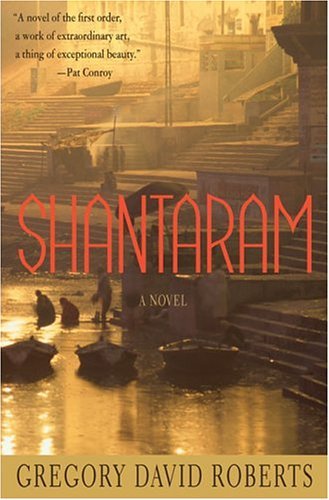
Literary Bite: Shantaram by Gregory David Roberts


Shantaram, by Gregory David Roberts, is one of my all-time favorite books.

It’s the story of an escaped Australian convict and former heroin addict, who makes his way to Bombay in the mid-1980s, lives and works as a doctor in a slum, spends three months in an Indian prison, gets involved with the local mafia, falls in and out of love, and fights the war in Afghanistan. And it’s based on the author's life – aka kinda TRUE!

I read Shantaram for the first time in summer 2008 (my first summer in DC!), and I knew almost immediately that it would become one of my most-loved books, due for multiple re-readings. Since then, I’ve recommended it a lot, thought about it sometimes, and finally got my hands on it again about a month ago. On a sunny warm evening, I sat down on my stoop, opened it up the 936-page block of gold, and immediately got SO excited to read it again!

Seriously, I challenge you to read the first page of this book and not want to read the whole thing. (You can read the first chapter here).
  • I was a revolutionary who lost his ideals in heroin, a philosopher who lost his integrity in crime, and a poet who lost his soul in a maximum security prison. When I escaped from that prison, over the front wall, between two gun towers, I became my country’s most wanted man. Luck ran with me and flew with me to India, where I joined the Bombay mafia. I worked as a gunrunner, a smuggler, and a counterfeiter. I was chained on three continents, beaten, stabbed and starved. I went to war. I ran into the enemy guns. And I survived, while other men around me died. They were better men than I am, most of them; better men whose lives were crunched up in mistakes, and thrown away by the wrong second of someone else’s hate, or love, or indifference. And I buried them, too many of those men, and grieved their stories and their lives into my own.
The NYT calls Shantaram “a gentle giant” and I agree. Despite its dark themes and depictions of crime and the worst of humanity, the novel remains light at heart, and is actually frequently laugh out loud funny. The dialog between Lin (aka Shantaram) and his friend Prabhakar the taxi driver is always hilarious, as is the relationship between Lin and the hit-man/best friend Abdullah.

And a lot of it is about love – some romantic (Lin and Karla), some filial (Lin and Khader), but mostly friendship (Prabhakar, Abdullah, Didier, etc. etc. etc.):
  • “At first, when we truly love someone, our greatest fear is that the loved one will stop loving us. What we should fear and dread, of course, is that we won’t stop loving them, even after they are dead and gone. For I still love you with the whole of my heart. I still love you. And sometimes, my friend, the love that I have and can’t give to you, crushed the breast from my chest. Sometimes, even now, my heart is drowning in a sorrow that has no stars without you, and no laughter, and no sleep.” 
Shantaram is a novel, but it is based on real events from Roberts’ life, which makes is that much cooler! And if you’ve read it, and therefore love Prabakar, you’ll be happy to learn that Prabhakar Kisan Khare was a real-life individual. Says the author:
  • "With respect, Shantaram is not an autobiography, it’s a novel. If the book reads like an autobiography, I take that as a very high compliment, because I structured the created narrative to read like fiction but feel like fact. I wanted the novel to have the page-turning drive of a work of fiction but to be informed by such a powerful stream of real experience that it had the authentic feel of fact.
It is supposedly a pretty accurate depiction of Bombay in the 1980s, as a city mid-urbanization being run my mafia councils and corrupt police as its population explodes. Says Lin of his first visit to a slum:
  • "As the kilometers wound past, as the hundreds of people in those slums became thousands, and tens of thousands, my spirit writhed....Still, that first encounter with the ragged misery of the slum, heartbreak all the way to the horizon, cut into my eyes. For a time, I ran into the knives."
(That's a great quote, right?)

I'm a little bit torn right now, because I want to tell you everything, but I don’t want to give anything away…so I’ll stop myself and just say READ THIS NOW. The only downside is that the book in hard-cover is too big to fit in my purse.


Thursday, May 2, 2013

By the Book: Grammy Jean


She doesn’t make blog appearances very often, but guys, my grandma is awesome. She’s 88 and writes me letters regularly, updating me on life in Los Altos, the Stanford art classes she audits, the garden and antique shows she goes to, the family’s odds and ends and parties I’m missing, and of course, the books she’s reading. I respond by printing out my blog posts and mailing them to her, so she can stay updated on all the action in my life. And in true family-member fashion, she is both my biggest fan and my most honest critic. (McKayla is Not Impressed has NOTHING on Grammy Jean.)

Grammy Jean serves as the family conduit for books.  She hears of something or reads it first, then passes it to my mama, who then passes it on to me and my sisters. Eventually we give it back to her, and she passes it to one of my aunts, who then pass it on to cousins.  So until recently I’d never met my cousin (LLC) and her family in Michigan, but turns out we’ve read most of the same books – thank you Grammy Jean!

When I told her about my Young Adult Fiction Challenge, she got super-excited (“Very good dear!”), because she’s been in a Children’s Lit Group for yeeeears (I mean really, possibly longer than I’ve been alive). Most recently I recommended they read Quest for a Maid, and at least according to Grammy Jean, all the ladies loved it!

She also thought my By the Book series was particularly fun, so she asked me to print out the questions for her to bring to her Lit Group. She was a bit disappointed by how few group-members took the time to fill them out, but then, as she says, “It is difficult getting people in their 80s and 90s to remember anything. Oh well.”

So, without further ado, here it is...


Grammy Jean, By the Book!


What book is on your night stand now?
Let’s say “on my kitchen table.” The Gardener Heist by Ulrich Boser [I've read this – it's good! It's about the Isabel Stewart Gardner Museum in Boston]

What was the last truly great book you read?  
Ben Hur by Lew Walace; and Depths of Glory by Irving Stone

Any literary genre you simply can’t be bothered with?  
Romance and Mystery. [Agreed.]

What’s your favorite Shakespeare?  
Julius Caesar and Henry V

What was the last book that made you cry?  
War Horse by Michael Morpurgo

The last book that made you laugh?  
Notes from a Small Island by Bill Bryson

Name a book you just couldn’t finish.  
I can’t remember not finishing a book. [Yet another reason Grammy Jean is awesome, right? #champion]

What were your favorite books as a child? Did you have a favorite character or hero?  
My favorite book was Scottish Chiefs by Jane Porter, and my favorite author was William Wallace. My heroes were Skeezix and Uncle Walt [has anyone else heard of them? I haven’t…info here], and Peter Rabbit.

What’s the best book your mother ever gave you to read?  
When Knighthood Was in Flower by Edwin Caskoden (aka Charles Major) [Grammy Jean lent me this when I was in junior high, and told me, with a very severe look, “Now listen dear. This is the most wonderful book and you will love it. Usually I don’t mind if you girls give me books back or not, but this one you MUST give back to me. If you don't I will be very upset with you.”], and Miss Minerva and William Green Hill by Frances Boyd Calhoun.

If you could meet any writer, dead or alive, who would it be?
Jane Austin

Have you ever written to an author? Did he or she write back?  
Brian Wildsmith – yes. [Grammy Jean! Give me details!]

You’re organizing a literary dinner party and inviting three writers. Who’s on the list?  
Jane Austin, Emily Bronte, Charles Dickens.
OR
Emily Caar, Tasha Tudor, Beatrix Potter.

What’s the best movie based on a book you’ve seen recently?  
"War Horse"

What are you going to read next?  
I’m currently reading A Place of Hiding by Elizabeth George

This interview is part of my By the Book series, in which I interview interesting people about their reading. Any readers out there interested in being featured here? If so, email me: eatrunreadmez@gmail.com.


Thursday, April 18, 2013

Literary Bite: A Little Princess


Around this time last year, I started my Young Adult Fiction Challenge. It kind of fell by the wayside as I tunneled down a wonderful adult-books rabbit hole, but the other night I needed something to read and SpeedyKate recommended one of her favorites: A Little Princess.


Shockingly I had never read it, but I do count the movie (the one with Shirley Temple) as one of the classics from my childhood. As I read A Little Princess it all came back to me – the voice, the clothes, the hair, the plot. It’s written in 1905 by Frances Hodgson Burnett, who went on to publish The Secret Garden in 1911.

Fun-fact – Burnett was a playwright and author until she met Louisa May Alcott (Little Women!!!) in 1879 and was inspired to write children’s fiction. Also she lived in DC! Also, her house was literally next to my current office. Small freaking world.

Anywho, the story is about Sara, a precocious and wealthy but very sweet little girl who is sent to boarding school in England after living with her father in India. I can't speak for every little girl out there, but I know that I (and I suspect SpeedyKate) wanted nothing more than to be just like Sara: smart and imaginative and from an exotic location and loved by everyone and challenged by something but ultimately coming out on top. Also an orphan-ish (why are orphans in books so cool?), and also an only child (sorry Sisters 1 and 2...I don't feel that way anymore, but you know how it was).

It’s just such a nice story – the plot moves along, as most young adult books do, and stands up well to an adult read. I don’t want to give too much away (plot twists! surprises!), so just read it, to yourself or your kids. Or watch the movie (wow the whole thing is on YouTube!).


Ooh and you can download the whole book read aloud online.

Thursday, March 28, 2013

Literary Bite: The Swan Thieves by Elizabeth Kostova


I suggested my book club read The Swan Thieves by Elizabeth Kostova, but honestly, I have no idea who recommended it to me in the first place. Anyone? [Update: mystery solved, it was this lovely grammarian.] Oh well, I’m glad it was good!

It's about an incredibly talent American painter, Robert Oliver, who attacks a painting at the National Gallery (I love stories that take place in DC!). After that Oliver refuses to speak, so his psychiatrist, Marlow, takes an unconventional approach to Oliver’s treatment and digs into Oliver’s past. “As Marlow is pulled deeper within Oliver’s troubled mind, he uncovers a tale of love, betrayal, and artistic obsession, and finds surprising possibilities in a package of nineteenth-century love letters.” (source)

Basically it is Marlow going back through the women in Oliver’s life – his ex-wife, mistress, and a mysterious and captivating woman in a painting – trying to piece it all together, but then getting sucked in to Oliver’s obsessions himself.

Don’t be intimidated by the book's length, just settle in for the ride. The story switches narrators and time periods chapter by chapter, so it really never drags. I preferred the modern-day parts of the story over the nineteenth century pieces, but they all came together well. The Swan Thieves isn’t particularly revolutionary, just a very nice read.

Oddly enough, as a non-artist, I really enjoyed reading about painters painting:

  • “The wilted garden is already covered with subtle color - indeed, it isn’t white. Beige, today? Silver? Colorless, if there is such a thing?”
  • “I believe in walking out of a museum before the paintings you've seen begin to run together. How else can you carry anything away with you in your mind's eye?”
  • “I don't think painters have the answers about a painting except the painting itself. Anyway, a painting has to have some kind of mystery to it to make it work.” 

The painting that Oliver attacks in the book is pure fiction -- “Leda” by Gilbert Thomas does not exist, nor does an artist named Gilbert Thomas for that matter. The swan myth it's based on is real though, and there are a lot of paintings depicting that story (Zeus comes to earth in the form of a swan and either rapes or seduces the beautiful Leda). The closest painting at the National Gallery is Raphael's Leda and the Swan, c. 1507:


Conclusion? A lovely read. I say go for it!


Thursday, March 7, 2013

Literary Bite: A Game of Thrones by George R. R. Martin


I have a shameless love of all things medieval. (And ancient Egyptian too actually – could this have something to do with the fact that those were the two coolest Eyewitness books in my elementary school’s library? Quite possibly.)

So yeah, kings and queens and knights in armor and battles and court intrigues – yes please all the time. I’ve read a lot of King Arthur fiction, and one of the most useless but interesting classes I took in college was History of Medieval Europe. Signing up for that course struck me as such a great idea at the time, but clearly I’ve forgotten 99.9% of it.

Luckily my lack of historical knowledge is not a problem in the context of reading A Game of Thrones by  George R. R. Martin, the first book of the "A Song of Ice and Fire" series. The series (which you probably know is also a TV show), takes place in a fictional place in medieval-ish times, and is mostly realistic but has moments of magic and fantasy. Clearly I enjoyed all 807 pages of it, and as I mentioned on Monday, I am looking forward to getting my page-turning hands on the next one asap.

Books like this are like candy (or drugs) for readers. I open the book, turn my brain off, and immediately disappear from wherever I am –  my bed, the metro, a coffee shop, waiting outside a restaurant…seriously, wherever – into the story. I mean, really, completely gone: I gasp, I frown, I sometimes tear up in public when reading...and I feel like that's ok. Because this is an intense story! It is violent, sometimes really gruesomely and graphically so, and there was a lot more weird sex than I was expecting (incest, rape, etc. I guess that’s why it’s on HBO).

My favorite story line was that of Daenerys Targaryen, because she starts out so weak and then turns into such a bad-ass! And I also really liked Jon Snow, I bet he becomes a big deal in future books.

Unless you’ve been living under a rock (which is totally fine and as a fellow sometimes sub-rock dweller I do not judge), you’ve probably already heard of the books and maybe seen the show. So I am here to tell you: next time you want something fun and awesome to read, A Game of Thrones! DO IT!

Thursday, February 28, 2013

Literary Bite: The Emperor's Children by Claire Messud


The Emperor’s Children, by Claire Messud, is about three 30-year-old friends living in Manhattan. I really should have liked this book. It has all the components of a good read: moving plot, interesting (if not believable  characters, quality writing, and a decent ending. But ooooooooohhhhh mmmmmmmmmmm gggggggggg it was a slog. I just couldn’t get into it, and what should have taken me a week to read (it’s 430 pages) took me three!

I have a high tolerance/ not so secret love for pretentiously witty banter (what can I say? I was raised on West Wing and Gilmore Girls), but parts of this book are just too over the top, even for me. The characters' conversations feel so contrived and ridiculous –  I suppose that's part of the satire of the whole book, but it was too much.

The plot is about the three super-upper class friends who met at Brown, came to NYC in the ‘90s, but despite their “promise” and “talent” have struggled to find success by 30 in early 2001. Gag me. This is not revolutionary – what 20-somethings’ skills don’t exceed the demands of their job? And most people don’t have the luxury to complain about it from the comfort of their parents’ mansion on the Upper East Side.
  • “It all came down to entitlement, and one's sense of it. Marina, feeling entitled, never really asked herself if she was good enough. Whereas he, Julius, asked himself repeatedly, answered always in the affirmative, and marveled at the wider world's apparent inability to see the light. he would have to show them - of this he was ever more decided, with a flamelike conviction. But he was already thirty, and the question was how?” 
Because of this inane whinyness, none of the characters were likeable. Even Danielle, who is the Midwestern “more practical” one, is insufferably annoying (an affair with a married man = you did that to you, stop feeling sorry for yourself).

I understand that the book is about “the gap between the real and the perceived,” and “a stingingly observant novel about the facades of the chattering class.” Murray Thwaite (the father of one of the 30-year-olds) represents hypocritical 1960’s liberalism, and Seeley (his daughter’s boyfriend) represents “postmodernism and its assumption that truth is fungible.” (Thank you NYT for the analysis.)

I will give it this – The Emperor’s Children is a book worth analyzing and the questions it poses are legit. The writing is well-done and Messud seamlessly interlaces the various plotlines. I just didn’t enjoy it.


Thursday, February 7, 2013

February 2013 Reading List


Things have been a bit slow for me recently when it comes to reading. I'm working on a book that I’m not loving, so it’s taking me longer than expected. But now I’m almost done and looking forward to reading something good next!

I rarely plan my reading lists in advance – usually I just pick up whatever is most convenient/finds its way to me/is recommended and lent by a friend. So here is a very tentative upcoming reading list, based off of recent recommendations.

I’m open to suggestions, so have you read anything good recently?

February 2013 Reading List

Her Fearful Symmetry by Audrey Niffenegger  –

  • February Book Club book. AND by the author who wrote The Time Traveler's Wife!
  • Julia and Valentina Poole are twenty-year-old sisters with an intense attachment to each other. One morning the mailman delivers a thick envelope to their house in the suburbs of Chicago. Their English aunt Elspeth Noblin has died of cancer and left them her London apartment. There are two conditions for this inheritance: that they live in the flat for a year before they sell it and that their parents not enter it. Julia and Valentina are twins. So were the girls’ aunt Elspeth and their mother, Edie.
  • The girls move to Elspeth’s flat, which borders the vast Highgate Cemetery, where Christina Rossetti, George Eliot, Stella Gibbons, and other luminaries are buried. Julia and Valentina become involved with their living neighbors: Martin, a composer of crossword puzzles who suffers from crippling OCD, and Robert, Elspeth’s elusive lover, a scholar of the cemetery. They also discover that much is still alive in Highgate, including—perhaps—their aunt. (more)

A Game of Thrones by George R. R. Martin – 

  • Strongly recommended by a) my officemate, and b) the world. I’m pretty excited about this one…I have a feeling it’ll only take a couple days to read.

  • Here is the first volume in George R. R. Martin’s magnificent cycle of novels that…comprises a genuine masterpiece of modern fantasy…Already hailed as a classic, George R. R. Martin’s stunning series is destined to stand as one of the great achievements of imaginative fiction.
  • Long ago, in a time forgotten, a preternatural event threw the seasons out of balance...Here an enigmatic band of warriors bear swords of no human metal; a tribe of fierce wildlings carry men off into madness; a cruel young dragon prince barters his sister to win back his throne; and a determined woman undertakes the most treacherous of journeys. Amid plots and counterplots, tragedy and betrayal, victory and terror, the fate of the Starks, their allies, and their enemies hangs perilously in the balance, as each endeavors to win that deadliest of conflicts: the game of thrones. (more)

The Lotus Eaters by Tatjana Soli – 


  • A unique and sweeping debut novel of an American female combat photographer in the Vietnam War, as she captures the wrenching chaos and finds herself torn between the love of two men. 
  • Tatjana Soli paints a searing portrait of an American woman’s struggle and triumph in Vietnam, a stirring canvas contrasting the wrenching horror of war and the treacherous narcotic of obsession with the redemptive power of love. Readers will be transfixed by this stunning novel of passion, duty and ambition among the ruins of war. (more)

Where'd You Go, Bernadette? by Maria Semple – 

  • This was my January Book Club book that I failed to read in time. SpeedyKate says it’s really good and has a copy, so I’m going to read it eventually.
  • Bernadette Fox is notorious. To her Microsoft-guru husband, she's a fearlessly opinionated partner; to fellow private-school mothers in Seattle, she's a disgrace; to design mavens, she's a revolutionary architect, and to 15-year-old Bee, she is a best friend and, simply, Mom.
  • Then Bernadette disappears. It began when Bee aced her report card and claimed her promised reward: a family trip to Antarctica. But Bernadette's intensifying allergy to Seattle--and people in general--has made her so agoraphobic that a virtual assistant in India now runs her most basic errands. A trip to the end of the earth is problematic.
  • To find her mother, Bee compiles email messages, official documents, secret correspondence--creating a compulsively readable and touching novel about misplaced genius and a mother and daughter's role in an absurd world. (more)


Thursday, January 31, 2013

Literary Bite: Travels with Myself and Another by Martha Gellhorn


Travels with Myself and Another by Martha Gellhorn sounds like an awesome book – a woman writing about her travels in a time before traveling alone was a thing women did. (Reminiscent of West with the Night, which is my favorite title ever and an excellent book).

  • Out of a lifetime of travelling, Martha Gellhorn has selected her "best horror journeys". She bumps through rain-sodden, war-torn China to meet Chiang Kai-Shek, floats listlessly in search of u-boats in the wartime Caribbean and visits a dissident writer in the Soviet Union against her better judgement. Written with the eye of a novelist and an ironic black humour, what makes these tales irresistible are Gellhorns explosive and often surprising reactions. Indignant, but never righteous and not always right, through the crucible of hell on earth emerges a woman who makes you laugh with her at life, while thanking God that you are not with her. (source)

Despite its promise, I am sorry to report that Travels with Myself and Another was not good. It was soooo tedious I could barely get through. Maybe it’s the dryness of her writing style; I felt like I was reading someone’s diary or travel notes, but not in a good way, which is surprising because the subject – traveling in obscure and difficult situations – is so cool and interesting and exciting!

Also, the “other” in the title is Ernest Hemmingway (Gellhorn was his second wife), but there is very very little about him…all we really glean is that he hated China and drank heavily. Duh.

The book is based off the premise that no one wants to hear good travel stories (think about it: you come back from a trip, a friend asks how was it? and within seconds your listeners’ eyes glaze over), but everyone loves a disaster. Though Gellhorn is supposed to be this amazing person (one of the best war correspondents and most interesting women of the 20th century according to some), I hated her a little bit. Mostly because of the Africa section – I felt like I was being beaten over the head with her extreme racism and it really bothered me. (I know, I know, it was a different time, etc. etc., but that doesn’t mean I’m ok with it.)

So I'm going to go ahead and say skip this one. If you want to read a good travel book read something by Paul Theroux (Dark Star Safari) or Peter Hessler (River Town).

And if you want to read a good book about one of Hemmingway's wives read The Paris Wife.


Thursday, January 24, 2013

By the Book: Jessica Clem-McClaren


This interview is part of my By the Book series, in which I ask interesting people about their reading. Any readers out there want to be featured here? If so, email me: eatrunreadmez@gmail.com.

Jessica Clem-McClaren is a freelance journalist and business director of a multimedia studio in Omaha, Nebraska. She loves the feeling of the spine of a new book, as well as discovering the worn pages in used (loved) books. She has written for a number of publications, including work for Ms. Magazine. She holds a Bachelor’s degree in English and a Master’s degree in Urban Studies. When not writing or drinking all the coffee in her studio, she enjoys marathon running, traveling, and cozy movie nights with her cat Genghis and her husband Jason.

What book is on your nightstand now?
The Handmaid’s Tale by Margaret Atwood. I have heard great things about this novel and am eager to dive in.

What was the last truly great book you read?
Extremely Loud and Incredibly Close by Jonathan Safran Foer. I loved his first book, Everything is Illuminated, and knew I was in for a good read with this piece. It was powerful and graphic, and the way he can write with such perspective is a gift.

Any literary genre you simply can’t be bothered with?
A few! Romance novels and certain fantasy (The Twilight and Lord of the Rings books come to mind), as well as self-help books. [Editor's note: Oh man I am trying hard to bite my tongue here...no LOTR though? Sigh, I suppose we can still be friends...]

A young, aspiring freelance journalist and business director wants your advice on what to read. What books do you suggest?
I hate books that give advice, so I would recommend some light evening reading: Middlesex by Jeffrey Eugenides, War of the Worlds by H.G. Wells, and Slaughterhouse-Five by Kurt Vonnegut.
What’s your favorite Shakespeare?
I have always had a guilty conscience for being an English major without a love for Shakespeare. During my undergrad work, I was able to study abroad in Stratford-on-Avon and got to see a few plays live. “A Midsummer Night’s Dream” and “As You Like It” were my favorites to see onstage.

If you could require the president to read one book, what would it be?
Considering his education, I don’t think Obama needs my advice for something to read! :) But I would recommend Born to Run by Christopher McDougall. Obama is an athlete and I think he would enjoy the story and appreciate the incredible writing.

What was the last book that made you cry?
Extremely Loud and Three Junes by Julia Glass. Both were very powerful and had such different messages. Everyone can relate to 911 since it was a national tragedy. Glass writes about a family that grows apart over time, and it really tugged at my heartstrings.

The last book that made you laugh?
Dress Your Family in Corduroy and Denim by David Sedaris. Every one of his books is amazing, but I also listened to the audiobook, and hearing him read his stories in the voices of his family about killed me.

The last book that made you furious?
The Sailor Who Fell from Grace with the Sea by Yukio Mishima. There are some incredibly violent scenes in the book that I couldn’t get out of my head. They were reminders about the sad sickness that is so prevalent in our otherwise lovely world. For this reason, I will always have a respect for this book, but I will never read it again.

Name a book you just couldn’t finish.
The General in his Labyrinth by Gabriel Garcia Marquez. He is such a respected author, but I could not get through this book. It just didn’t resonate with me and I was bored by page 3.

What were your favorite books as a child? Did you have a favorite character or hero?
I come from a family of big readers, so I had several favorites! Two of my favorites from when I was really young were But No Elephants by Jerry Smath, and Milk and Cookies by Frank Asch. As I got older, I loved The Eyes of the Dragon by Stephen King. This was a gripping, beautifully written novel that I still reread to this day.

What’s the best book your mother ever gave you to read?
She introduced me to many fantastic books. I remember always seeing my parents reading at night together, and we always read at the dinner table if we weren’t chatting. She introduced me to The Eyes of the Dragon, and some sci-fi novels like Jurassic Park, Congo (both by Michael Crichton), as well as R.L. Stein’s Goosebumps and Fear Street series.

If you could meet any writer, dead or alive, who would it be? What would you want to know?
Harper Lee. To Kill A Mockingbird was so moving that once I finished, I just sat on the edge of my chair and thought through the novel for about an hour. What an amazing gift to write something so powerful and honest.

Have you ever written to an author? Did he or she write back?
I’ve never written to an author, but I did have a chance to meet Isabel Allende while I was living in Washington , DC. She signed my event pamphlet, so I think that counts!

You’re organizing a literary dinner party and inviting three writers. Who’s on the list?
Jeffrey Eugenides, Jonathan Safran Foer, and Tina Fey.

What’s the best movie based on a book you’ve seen recently?
Movies never do the book justice! To be honest, "The Walking Dead" on AMC is probably my favorite. It is based off a comic book series by Robert Kirkman and is truly terrifying and fun to watch. Two Emmy awards can’t be wrong! :)

What are you going to read next?
I have a few books on my desk, but I’m trying to be better about just reading one. I have over 400 books, so it is hard to limit myself! I will probably stick with The Handmaid’s Tale for now.

Thank you so much!


Thursday, January 17, 2013

Literary Bite: Wild: From Lost to Found on the Pacific Crest Trail by Cheryl Strayed


Tell me, what is it you plan to do
with your one wild and precious life? - Mary Oliver

You've probably seen this book around and about the stores, and you may have already fallen victim to the enthusiastic Omg you should read this! In reading, as in all aspects of life, you’re only a victim if you choose to be -- and I suggest that in the case of reading Wild: From Lost to Found on the Pacific Crest Trail by Cheryl Strayed, you should definitely choose to be! (Is that convoluted enough? I’m saying you should read this.)


I borrowed this book from Sister1 when I was at home, three days before my return to DC. It’s a quick read, but post-skiing exhaustion combined with the awesome addictiveness of Nashville meant that I got to SFO with about 20 pages to go. It wasn’t a for-keeps borrow, so I left the book with my sister and headed into the airport hoping to find a copy in one of the bookstores and happily finish it standing up backpack-on before my flight. The first bookstore didn’t have it (panic!!!)…but the convenience/candy store did. #Win!

It was like this, mostly because I cried a lot reading this book.


I don’t know why I liked it so much…the writing was meh ok, the protagonist was generally likable  and the story was occasionally oddly repetitive…but the subject was SO INTERESTING.

It’s about the author’s solo hike of the Pacific Crest Trail (like the Appalachian trail but longer, harder, more beautiful, and fewer people do it), while she comes to terms with the death of her mother and figures out her life. She was 26 when she hiked it (alone!) in 1995, and even though she was woefully unprepared, she made it.

PCT map, and more info on the trail.

The trail starts in Mexico and goes all the way to Canada, but Strayed hiked starting in the Mojave Desert in Southern California. Because 1995 was an epic snow year in California (I actually remember this skiing/flooding-wise), she had to skip a lot of the Sierras and resume the hike further north in California and finish in Washington State.

I don’t really feel the need to “find myself,” but I would love to do the PCT. The book is oddly inspirational in a she-did-it-even-though-she-probably-shouldn’t-have-been-able-to sort of way. And it is refreshingly not cheesy at all, unlike many young peoples’ memoirs.

It’s much more than just a hiking story (because how many times can you say you woke up and walked all day before it gets boooring?), it’s about her family, her relationships, and figuring out how to be alone.

I definitely recommend this book. Read it and then let’s talk about when to go hike the PCT!


Thursday, January 10, 2013

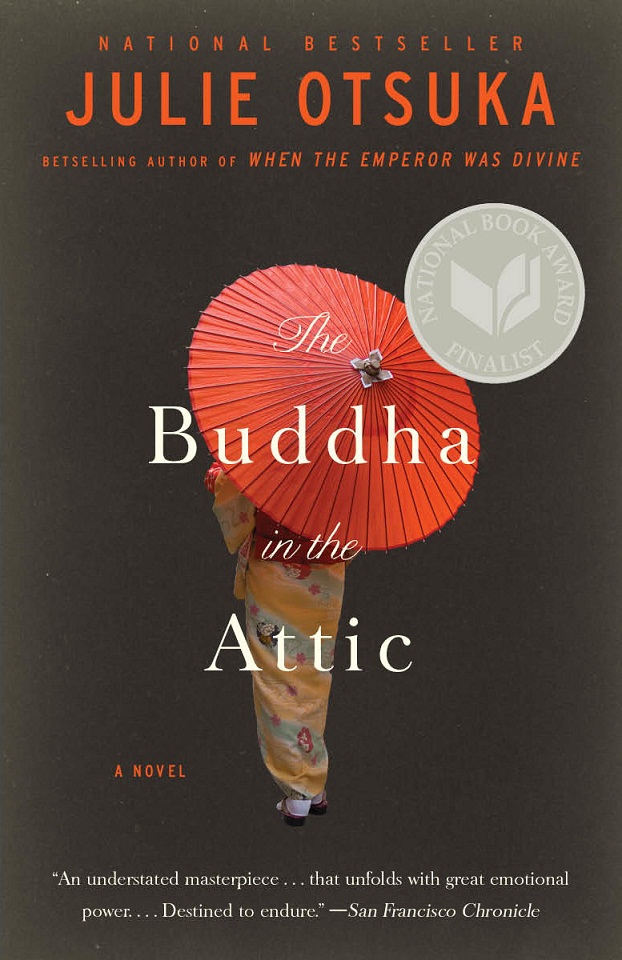
Literary Bite: The Buddha in the Attic by Julie Otsuka


You don’t think it’s possible, but this book is like nothing you’ve ever read before. And it’s so good.

That’s what my mama told me when she handed me The Buddha in the Attic by Julie Otsuka, and I was a little skeptical. No really, she insisted. You think you’ve read every writing style out there, but this one is different and you will love it. 

Turns out, per usual, she was right.

The book is about Japanese picture brides coming to America after WWI, and their lives in the US – marriage, children, WWII, Japanese internment and afterwards. Picture brides are much like mail-order brides. They were set up by a “matchmaker” who used pictures to match immigrant workers with women from their homeland.

  • “On the boat we could not have known that when we first saw our husbands we would have no idea who they were. That the crowd of men in knit caps and shabby black coats waiting for us down below on the dock would bear no resemblance to the handsome young men in the photographs. That the photographs we had been sent were 20 years old. . . . That when we first heard our names being called out across the water one of us would cover her eyes and turn away — I want to go home — but the rest of us would lower our heads and smooth down the skirts of our kimonos and walk down the gangplank and step out into the still warm day. This is America, we would say to ourselves, there is no need to worry. And we would be wrong.”
  • “On the boat we carried…silver mirrors given to us by our mothers, whose last words still rang in our ears. You will see: women are weak, but mothers are strong.”

It’s border-line poetry, but poetry with a story, told in first person plural. Otsuka writes a long melancholy poem about love and loss. Or more like 30 (50? Countless?) parallel poems echoing one another and rolling from themed refrain to themed refrain – Come Japanese, First Night (woah seriously this chapter is a must-read), Whites, Babies, Children, A Disappearance. [When I was in school in California, we were still barely talking about Japanese internment – I still don't know if it's taught at all in State and/or US history, but it should be!]

All the stories are mixed up to together paint a complete picture of the picture brides’ experience. It's kind of like impressionist art that doesn’t look like anything close up, but from far away you see what the artist wants you to see.

I thought the style would annoy me, when I realized that every sentence started and ended a new story, but then I found myself settling into the rhythm and rolling along, building my reading momentum, along with the unfolding many many many tales.

The book is short (144 pages) and I could not put it down. Some sentences were so powerful that I read them a couple times, just to fully process all the author packed into so few words. I’ve never felt so attached to characters whose names I don’t know and who all I have of their lives is one discreet sentence.

You MUST read this book. Actually, writing this post makes me want to re-read it asap...

And in case you’re not sold by my review, you can read the first chapter, “Come Japanese,” here.


Thursday, January 3, 2013

Literary Bite: Lost Memory of Skin by Russell Banks


A few weeks ago I finished a book, set it on my bedside table, and noticed Lost Memory of Skin by Russell Banks right next to it, ready to read. This is all good and normal, except that I had absolutely no memory of ever seeing it before/putting it there/where it came from. SpeedyKate, is this from you? I asked, showing her the reptilian cover. Nope, never seen it before. Huh, a book mystery (but not a mystery book – I hate mysteries). Oh well, it was there, in my hands, and I needed a book to read, so why not? 

And I’m so glad I did. Lost Memory of Skin is about a sex offender and a college professor in Florida, which sounds totally bizarre and is totally bizarre, but also very good!  The Kid (a 22-year-old sex offender) lives under a Florida causeway in a colony of other sex offenders, because that’s the only place they are allowed to live in the town, since they have to be 2,500 feet away from anywhere with children. It was fascinating to think about how I read this book – the Kid, despite being superficially despicable (according to society/common sense/cultural norms), really was the protagonist and as a reader, I sympathized with him.

A two-time Pulitzer Prize finalist, Banks may be the most compassionate fiction writer working today, and the Kid is only his most recent lens into the souls of seemingly decent men who do terribly indecent things out of ignorance, thirst and desperation in a deeply uncaring world. Balancing impressively on a moral tightrope, Banks never absolves the Kid of his actions even as he sympathizes with him. (NYT)

The Professor is an equally complex and thoroughly developed character – he is morbidly obese and incredibly intelligent and also has a very mysterious past (that I won’t give away, but it is good). 

The two meet because the Professor wants to study the intersection of homelessness and sex offenders, and “save” the Kid. The perspective switches between the two and we get glimpses into both pasts, making it clear that there are no “good guys” and “bad guys” and that perhaps the curer should be the curee? (I just made up that word – you know what I mean.)

It sounds like a philosophical thinking book, but it is actually very plot-driven. The story started strong and finished even stronger, with unexpected twists and turns; I literally could not put it down for the last half. It is serious and sometimes depressing, but also sometimes funny. Banks is an incredible author and I will definitely look into his other books. 

You should read this! And let me know because I really really really want to discuss the ending with someone – this would be a great book club book.

Oh and the solution to my book-finding mystery is that my mama gave it to me over Thanksgiving and I completely forgot. It is one of her book club books for the year and she has not yet read it, so I was the test-dummy. Happy to help!


Thursday, December 13, 2012

Literary Bite: Skinny Legs and All by Tom Robbins


This book was super weird. I liked it. But it was super weird.

Despite the fact that I write book reviews, I don’t actually read them. So when someone hands me a book and says Mollie, read this!, I say Ok! and jump right in.

It wasn’t until I’d read about 20 pages that I wondered, what is this supposed to be about??? And read the back of the book:

  • An Arab and a Jew open a restaurant together across the street from the United Nations... It sounds like the beginning of an ethnic joke, but it's the axis around which spins Tom Robbins's gutsy, fun-loving, and alarmingly provocative new novel, in which a bean can philosophizes, a dessert spoon mystifies, a young waitress takes on the New York art world, and a rowdy redneck welder discovers the lost god of Palestine--while the illusions that obscure humanity's view of the true universe fall away, one by one, like Salome's veils. 

My biggest problem with the story was the inanimate-objects-as-characters parts. Robbins used them as a vehicle to philosophize, which is a bit annoying, and frankly I just don’t care what a can of beans “thinks.” I didn’t think Robbins' ideas on the Middle East/religion/race were particularly revolutionary either. The human story line was great, but in the middle of the book the objects took over and it felt forced and tedious.

So to talk about the human side of the story, it’s about Ellen Cherry, a woman from the South who moves to New York with her goofy husband, to become an artist. When her husband accidentally finds success in art long before she does, she starts working at the aforementioned restaurant and all of a sudden finds herself in the middle of the conflict over the Middle East.

Robbins’ writing style is fun – very figurative and rhythmic ("The winter passed as slowly and peacefully as a boa constrictor digesting a valium addict"). For the most part the story was a fun mix of absurdity, sexuality, and racism (if we can call that a “fun mix”?). Apparently Robbins’ has a huge following, and just based on this book, I would say he’s definitely a love-it-or-hate-it type of writer.

If this kind of book sounds like your jam then read it! But I'm hesitant to strongly recommend it.